Concrete Placement Where Chute Trucks Bog Down
Agricultural Concrete Pumping in Yakima for orchard and vineyard sites where row spacing and soft soil block ready-mix truck access
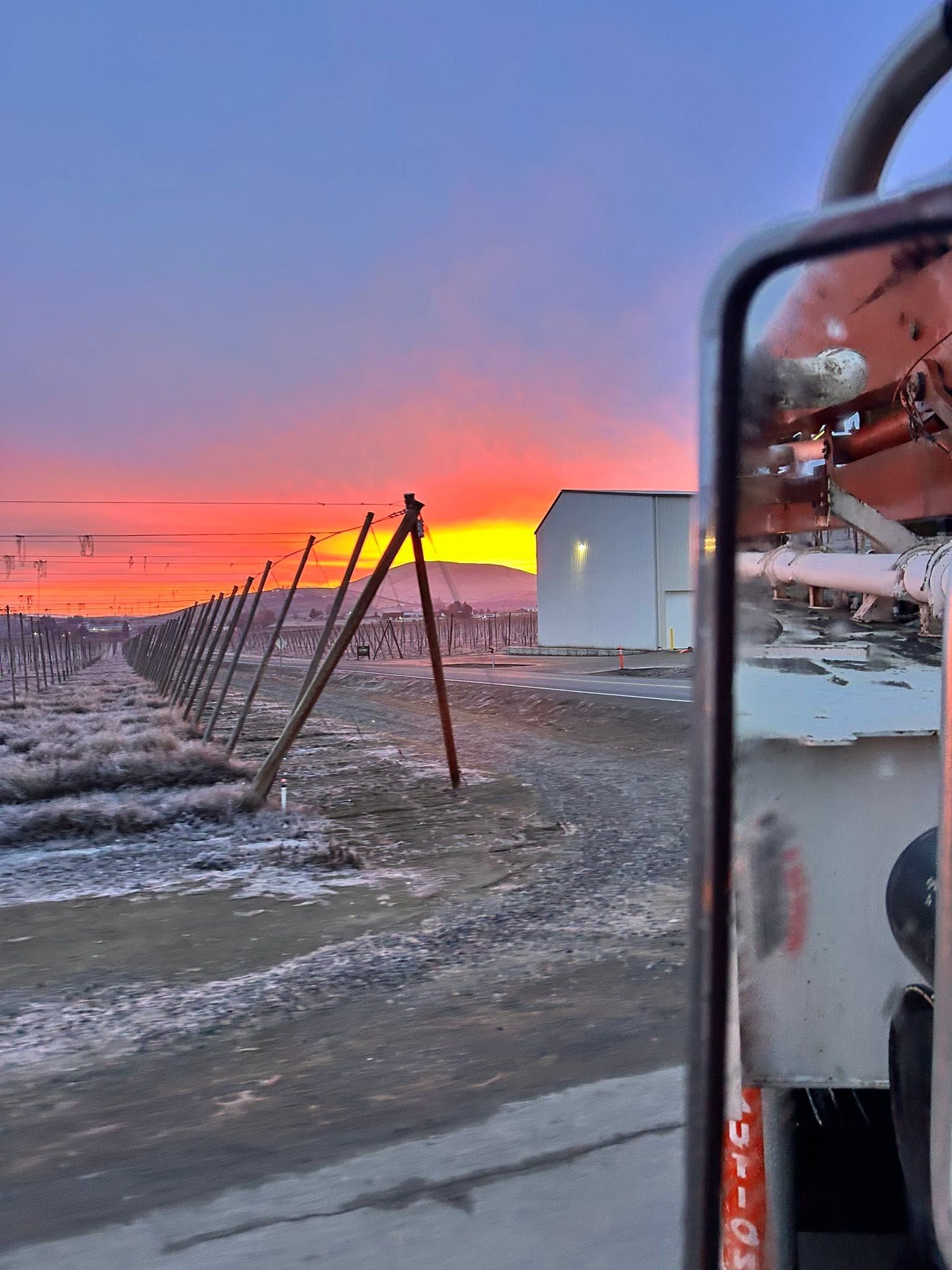
Orchards and vineyards across the Yakima Valley generate concrete demand in locations no chute truck can safely reach—row spacing prevents truck maneuvering, soft field soil causes trucks to sink, and remote irrigation infrastructure sits hundreds of feet from the nearest hardstand. Tripl-E Concrete Pumping uses boom truck equipment to place concrete for barn floors, equipment pads, and irrigation structures without driving heavy ready-mix trucks into fields where they bog down or damage crops. You need boom pump delivery when the pour location sits beyond chute reach and the ground conditions make wheeling barrows impractical or impossible.
The service involves positioning the boom truck on stable ground—typically a farm road, driveway, or compacted staging area—then extending the boom over rows, fences, or soft soil to deliver concrete directly to the pour site. The boom reaches locations a ready-mix truck cannot access without risking getting stuck, and the controlled placement keeps concrete flowing to remote pours without the labor cost of barrow crews.
Request a farm-site evaluation to identify boom truck staging areas and pour locations for your Valley agricultural project.
What Proper Agricultural Pump Services Require
Agricultural concrete pumping demands familiarity with Valley farm operations and the access challenges specific to orchard and vineyard properties. The boom operator must understand row layouts, recognize when soil conditions will not support truck weight, and coordinate with ag contractors who work on schedules dictated by harvest cycles and weather windows. Eastern Washington Valley floor hosts the majority of orchard and vineyard concrete work, and boom trucks serve as the only practical delivery method for pours located in active growing areas where heavy trucks cannot travel.
After the pour finishes, you have equipment pads that support machinery weight, barn floors that handle livestock and vehicle traffic, or irrigation infrastructure placed exactly where it needs to be—all without ruts, crop damage, or stuck ready-mix trucks tearing up your farm roads. The boom pump does not finish or cure the concrete, but controlled delivery to remote farm-site locations keeps the project moving without access delays or equipment damage.
This service applies to farm operations requiring concrete in locations chute trucks cannot reach. Boom pump delivery works for equipment pads, barn floors, irrigation structures, and similar ag-related concrete placements across orchards, vineyards, and other Valley agricultural properties.
Common Questions About This Service
Farmers and agricultural contractors working across Yakima Valley orchard and vineyard properties typically ask about boom reach, soil conditions, and scheduling coordination before booking pump services.
How far can the boom extend to reach remote pour sites?
Boom reach depends on the specific truck configuration, but typical boom pumps extend 80 to 120 feet horizontally and can articulate over obstacles like fences, rows, and irrigation lines—exact reach gets confirmed during the farm-site evaluation.
What soil conditions allow the boom truck to set up safely?
The boom truck requires stable ground for outrigger placement—compacted farm roads, driveways, or hardstand areas work well, while saturated or freshly tilled soil does not provide adequate support and requires alternate staging locations.
When should I schedule the pump truck around Valley harvest cycles?
Pump truck scheduling happens in coordination with your concrete contractor and ready-mix supplier, ideally during weather windows when field access is dry and ag operations are not actively using the staging area—late summer and early fall often present tight scheduling around harvest demands.
Why not just use wheelbarrows to move concrete on farm sites?
Wheelbarrow crews work for small pours within 50 feet of the truck, but for larger volumes or remote locations, labor costs and time delays make barrows impractical—boom pumping places concrete continuously without the crew fatigue and slow pace of manual hauling.
Does the pump truck damage crops or irrigation lines during setup?
The boom truck parks on stable ground outside the growing area and extends over rows and infrastructure rather than driving through them—the boom delivers concrete from above, so there is no need for the truck to enter fields where it would compact soil or damage crops.
Tripl-E Concrete Pumping is locally owned and family operated, with deep familiarity with Yakima Valley agricultural operations and the access challenges specific to orchard and vineyard properties. Schedule a site consultation to review row layouts, soil conditions, and boom access for your farm concrete project—fully insured and on time, thank you for the opportunity to be of service.