Slabs Placed Before the Heat Hits
Concrete Slab Pumping in Yakima for even thickness and controlled set rates during Valley summer conditions
Afternoon heat in the Yakima Valley during summer accelerates concrete set rates, which shortens the window for finishing and increases the risk of surface cracking as the slab cures. Early morning slab pours keep the mix workable longer and give finishing crews time to complete surface work before temperatures climb. Tripl-E Concrete Pumping schedules slab placements to control set rate and uses boom pump delivery to maintain consistent slab depth across the pour area, a level of precision that chute work rarely achieves on projects.
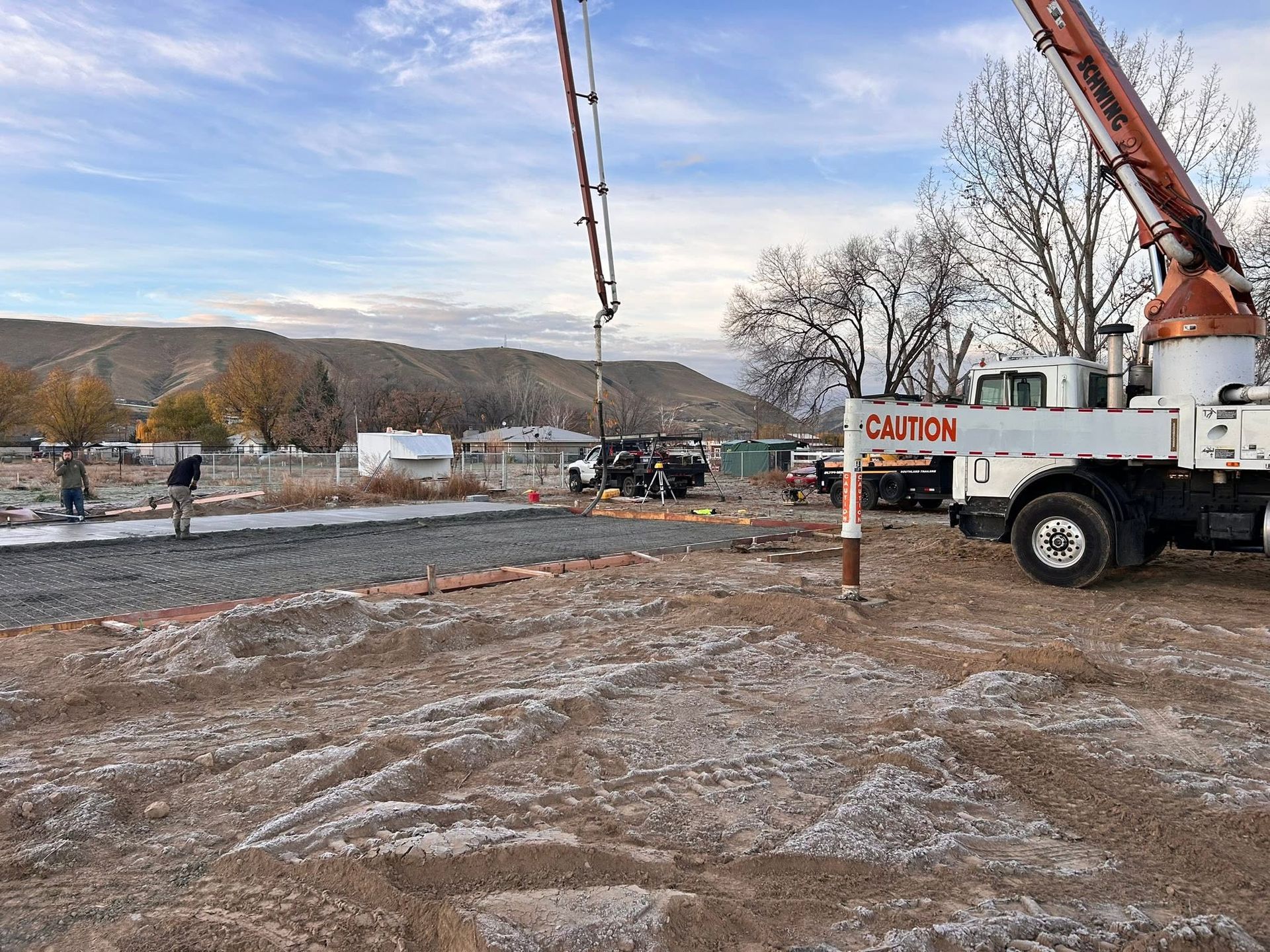
Slab pumping places concrete through a boom-mounted pipeline that reaches across forms and delivers mix at a steady, controllable rate. The boom positions once, then concrete flows to multiple placement points without moving the truck or disturbing finished grade. This method distributes concrete evenly across the slab area and eliminates the thickness variations that occur when chute pours pile material in one spot and crews spread it manually.
Arrange an early morning pour slot to take advantage of cooler temperatures and extended finishing time.
What Proper Slab Placement Requires
The boom truck sets up on stable ground outside the slab perimeter, and the operator extends the boom to distribute concrete across the form area in a planned sequence that maintains uniform depth. Concrete flows at a rate that matches your crew's screeding and floating speed, which prevents the surface defects that happen when material sits too long before finishing begins. Timing the pour for early morning keeps the mix temperature lower and extends the workable period before initial set starts.
After placement and finishing complete, the slab cures with consistent thickness across the entire surface, which distributes load evenly and reduces the risk of cracking caused by thin spots or uneven substrate contact. The finished slab performs as specified because the concrete went down right the first time, without the rework or patching that inconsistent placement creates.
Slab pumping delivers concrete to your prepared forms but does not include screeding, floating, troweling, or curing compound application. Your finishing crew handles surface work while the concrete remains workable. If your project includes decorative stamping or coloring, those processes happen after pump delivery, and timing coordination becomes even more critical in hot weather.
Common Questions About This Service
Slab pump questions typically address timing, thickness control, and how Valley heat affects the work.
Why does pour timing matter for Yakima Valley slabs?
The Valley's dry summer heat causes concrete to set faster in the afternoon, which shortens the time available for finishing and increases surface cracking risk—early morning pours extend workability and improve finish quality.
How does boom pump placement create more consistent slab thickness than chute pours?
The boom distributes concrete across the form area in a controlled pattern rather than piling it at one access point, which reduces the manual spreading work that introduces thickness variation.
What site preparation is required before slab pumping?
Forms must be set, subgrade compacted, and reinforcement placed—the pump delivers concrete into ready forms, and your crew handles consolidation and finishing in real time.
How is the boom positioned to reach across a residential slab?
The operator walks the site beforehand to confirm stabilizer placement on solid ground and plan the boom reach sequence that covers the full slab area without repositioning mid-pour.
When should contractors choose pump placement over direct chute delivery for slabs?
Pump placement makes sense when slab size or site layout prevents truck access to all pour areas, or when thickness consistency matters enough to justify the process control that pumping provides.
Tripl-E Concrete Pumping is a locally owned and fully insured boom pump specialist serving residential and commercial projects across the Yakima Valley. Contact the operator directly to confirm pour scheduling and placement logistics for your slab project.