Vertical Pours That Keep Forms Intact
Wall & Vertical Pour Pumping in Yakima for hillside retaining walls and stem walls where uncontrolled pressure blows forms
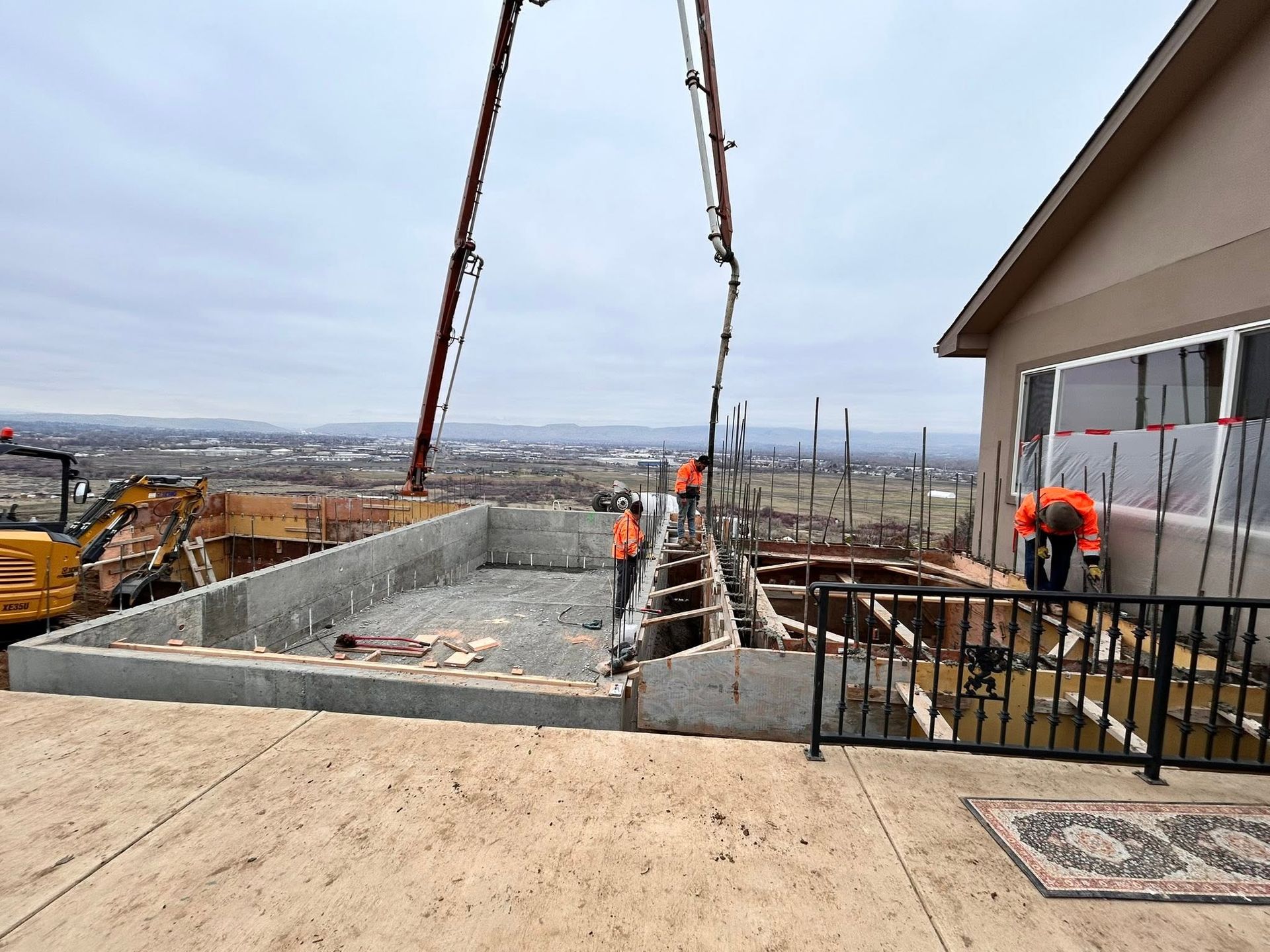
Retaining walls require deliberate pump pressure management—uncontrolled flow speed blows forms apart and leaves surface defects that compromise the finished wall. Tripl-E Concrete Pumping delivers controlled boom pump placement for vertical concrete pours across the Yakima Valley, managing pressure and pour rate based on wall height, form type, and site terrain. You call for a vertical pour when standard chute delivery cannot reach the wall location or when form integrity depends on controlled concrete flow rather than gravity dumps.
The service involves positioning the boom truck to account for slope and access limitations, then controlling concrete flow rate to prevent hydraulic pressure from overwhelming vertical forms. Each vertical pour begins with a site walk to determine boom sequence and pour staging—tall walls receive concrete in controlled lifts rather than continuous fills, and pressure adjustments happen throughout the pour as forms bear increasing weight.
Schedule a property evaluation to review wall height, form specifications, and boom truck access for your retaining wall project.
Why Controlled Pressure Matters on Vertical Work
Vertical concrete placement is not the same work as flatwork pumping—the concrete enters forms from the side or top and generates hydraulic pressure against bracing and tie systems as it fills. If the pump operator pushes concrete too fast, the pressure exceeds what the form system can handle, resulting in blowouts that spill concrete and leave voids or surface defects in the finished wall. Boom positioning also matters—Valley hillside properties often lack level staging areas, so the boom extends from angles and elevations that require adjustment throughout the pour sequence.
Once the pour finishes, you see walls with consistent fill from top to bottom, no voids behind rebar, and no surface blemishes caused by form movement or blowouts. The forms come off cleanly because the concrete cured against stable bracing rather than shifting panels. Tripl-E Concrete Pumping adapts boom sequencing and pressure control to each job site's terrain and form specifications, so the finished wall matches the design rather than showing defects caused by rushed or careless pump work.
This service addresses retaining walls, stem walls, and other vertical concrete placements where access or height makes chute trucks impractical. The boom pump does not finish the concrete—that remains the contractor's responsibility—but controlled delivery directly affects whether the forms stay intact and the wall cures properly.
Questions Before Starting Your Vertical Pour
Contractors and property owners working on hillside projects across the Valley typically ask about boom reach, pressure management, and scheduling before booking vertical pour services.
What makes vertical pours different from flatwork?
Vertical pours generate hydraulic pressure against form bracing as concrete fills from the side or top, so pump speed must be controlled to prevent blowouts—flatwork does not carry the same risk because gravity and screeding handle the concrete once it leaves the chute or hose.
How does boom positioning work on sloped Yakima Valley properties?
The boom truck parks on the most stable available surface, then the boom extends and articulates to reach the pour location—on hillside sites in Nob Hill or Terrace Heights, that often means working from angled staging areas and adjusting boom extension throughout the pour as forms fill.
When should I schedule the pump truck for a retaining wall project?
The pump truck arrives once forms are braced, inspected, and ready to receive concrete—scheduling happens in coordination with your ready-mix delivery so the concrete does not sit waiting or arrive before the pump crew is in position.
What happens if a form blows out during the pour?
Controlled pump pressure and deliberate pour sequencing prevent blowouts—if forms are properly braced and the concrete flows at a rate the form system can handle, blowouts do not occur.
How long does a vertical pour take compared to standard flatwork?
Pour duration depends on wall height, volume, and site access, but vertical pours typically take longer per yard because pressure must be managed and forms monitored throughout the process rather than simply dumping concrete into place.
Tripl-E Concrete Pumping operates as a locally owned, fully insured boom pump specialist with nearly 10 years of experience managing vertical pours across Yakima Valley hillside properties. Arrange an on-site consultation to review form specifications, slope conditions, and boom access for your retaining wall or stem wall project—thank you for the opportunity to be of service.