Concrete Delivery When Standard Trucks Cannot Access
Hard-to-Reach Concrete Placement in Yakima for fenced yards, interior spaces, and hillside builds where chute trucks and wheelbarrows fail
Valley terrain creates access problems that chute trucks cannot solve—slopes in West and East Yakima, tight residential lots with fenced yards, and interior placements inside buildings all block standard concrete delivery. Wheelbarrow crews work for small loads, but labor costs climb quickly and the pace slows as distance and obstacles increase. Tripl-E Concrete Pumping addresses hard-to-reach placements using boom extension and hose attachments that place concrete where chute trucks cannot go and where manual hauling becomes inefficient or impractical.
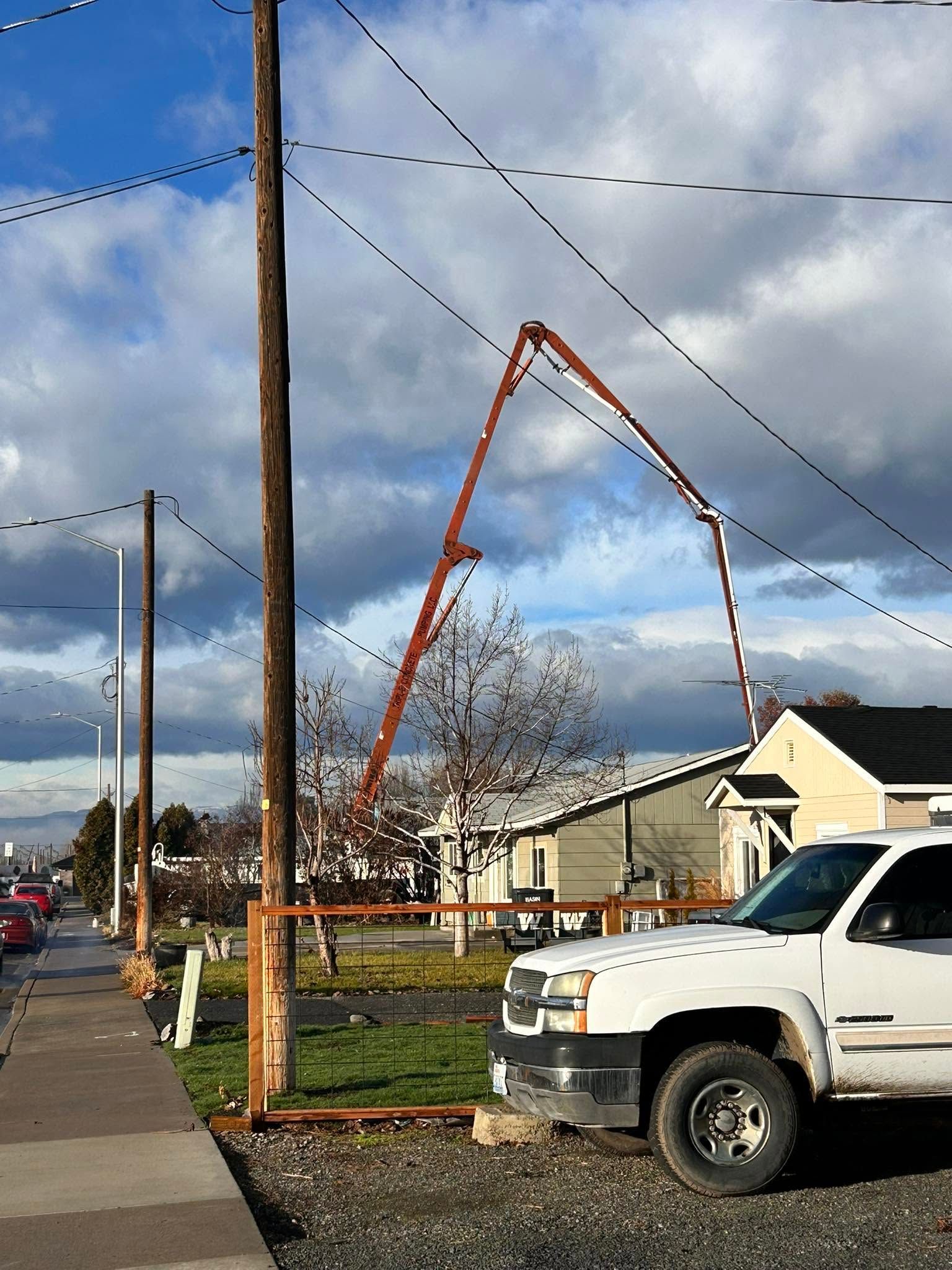
The work involves positioning the boom truck on the nearest accessible surface, then extending the boom over fences, structures, or terrain obstacles to reach the pour location. When the boom cannot extend directly to the placement area—such as interior rooms or areas blocked by rooflines—hose attachments connect to the boom and route concrete through doorways, windows, or other openings. This setup handles pours that would otherwise require tearing down fences, hauling barrows up slopes, or abandoning the project due to access constraints.
Schedule a property evaluation to identify boom staging locations and hose routing options for your hard-to-reach concrete placement.
How Hard-to-Reach Placement Addresses Access Constraints
Hard-to-reach concrete placement is not an upsell or specialty service—it is a core capability of boom truck and hose extension equipment designed specifically to solve access problems. The boom articulates to clear obstacles like fences, utility lines, and structures, while hose extensions allow concrete to flow into interior spaces the boom cannot reach directly. Nearly 10 years of experience navigating challenging Yakima Valley job sites means the operator recognizes access constraints during the initial walkthrough and plans boom positioning and hose routing before pour day arrives.
After the pour completes, you have concrete placed exactly where it needs to be without tearing down fences, hauling wheelbarrows across your property, or accepting compromised placement because the location was too difficult to reach. The finished concrete looks the same whether it came from a boom, a hose extension, or a chute truck—what changes is how efficiently and cleanly the concrete arrived at the pour site.
This service applies to any concrete placement blocked by terrain, structures, or property features that prevent chute truck access. The boom pump and hose extensions deliver concrete to the pour location—finishing, screeding, and curing remain the contractor's responsibility once the concrete is in place.
What Property Owners Usually Ask
Homeowners and contractors working on Yakima Valley properties with access challenges typically ask about boom reach, hose capabilities, and setup logistics before scheduling hard-to-reach concrete placements.
What types of obstacles can the boom clear to reach a pour site?
The boom extends over fences, sheds, vehicles, landscaping, and single-story structures—anything that blocks horizontal chute access but does not prevent the boom truck from parking nearby and extending overhead gets handled with boom articulation alone.
When does a hose extension get used instead of just the boom?
Hose extensions attach to the boom when concrete must flow into interior spaces, around corners, or through openings the boom cannot reach directly—examples include basement pours, garage floors inside closed structures, or backyard placements completely enclosed by fencing and buildings.
How does hose placement work for interior concrete pours in Yakima residential builds?
The boom positions near the building, the hose runs through a door or window opening, and concrete flows through the hose to the interior pour location—the hose diameter and length get selected based on the distance and concrete mix specifications.
Why not just remove a fence section or gate to let the chute truck access the backyard?
Removing and reinstalling fencing adds cost and delays, and some properties have terrain or adjacent structures that block truck access even with fences removed—boom and hose placement solves the access problem without modifying your property.
How long does setup take for hard-to-reach placements compared to standard chute pours?
Setup time depends on boom positioning, hose routing, and site-specific obstacles, but most hard-to-reach placements add 15 to 30 minutes compared to direct chute pours—that setup time prevents hours of wheelbarrow labor or the cost of removing and rebuilding fences.
Tripl-E Concrete Pumping is a locally owned, fully insured boom pump specialist serving Yakima Valley contractors and homeowners facing access challenges on residential and small commercial projects. Request an on-site consultation to review property access, boom staging options, and hose routing for your hard-to-reach concrete placement—job-site ready and honest, thank you for the opportunity to be of service.