Multi-Truck Sequencing Without Cold Joints
Large-Volume Concrete Pumping in Yakima for commercial and agricultural contractors where unplanned pour pauses create structural defects
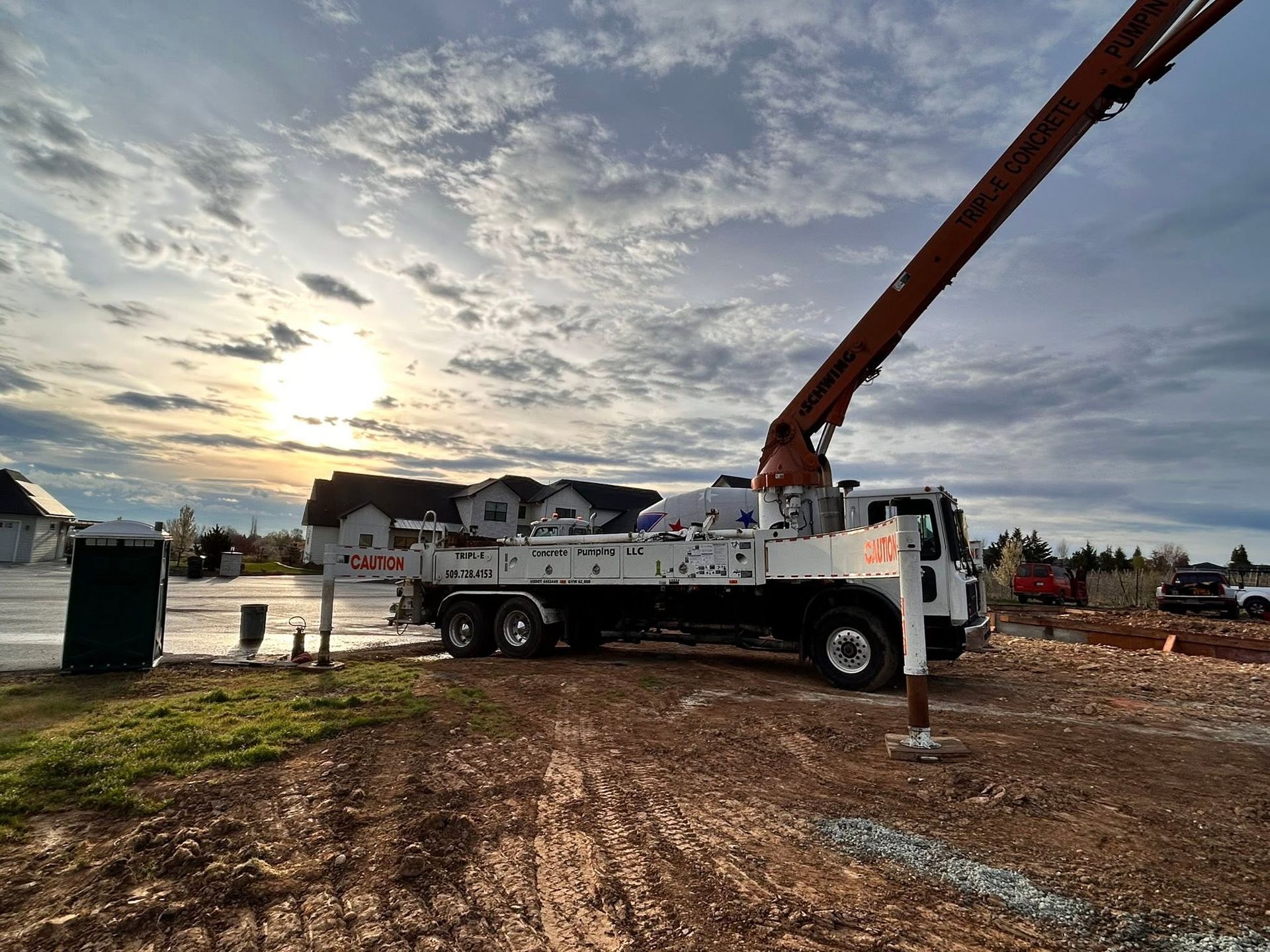
Large commercial and agricultural pours in Eastern Washington require require coordinated delivery of multiple ready-mix trucks in sequence to keep the boom pump running continuously without gaps that create cold joints. When concrete delivery pauses mid-pour and the placed material begins to set before the next load arrives, the resulting cold joint weakens the slab and introduces a failure plane that will crack under load or environmental stress. Tripl-E Concrete Pumping operates boom pump equipment for Yakima Valley contractors managing volume pours where concrete supplier coordination and sustained pump output are job requirements, not optional extras. The service includes pre-pour site walks and staging coordination that scale to large projects where sequencing errors carry structural and financial consequences.
Multi-load sequencing keeps the boom pump actively placing concrete while ready-mix trucks cycle through delivery, discharge, and departure without interrupting flow. The process requires coordination with concrete suppliers on batch timing, communication with the truck drivers on staging positions, and operator experience managing boom repositioning as the pour progresses across large footprints. Fully insured operators with commercial and agricultural contractor relationships understand that large-volume pours fail when logistics aren't planned in advance—not when the pump shows up on pour day.
Request a planning consultation to map truck sequencing, staging areas, and boom coverage for your large-volume project.
How Large-Volume Pumping Addresses Sequencing Failures
Large-volume pump operations begin days before the pour with site layout review, boom reach mapping to all placement zones, and delivery scheduling coordination with your concrete supplier. The operator walks the site to identify truck staging areas that allow efficient entry and exit without blocking active placement zones, confirms outrigger positions that support boom movement across the entire pour area, and establishes communication protocols for real-time adjustments during the pour. This planning prevents the mid-pour delays that occur when trucks can't access staging areas or when boom reach comes up short in corner sections.
During the pour, the boom maintains continuous output as trucks arrive in sequence—one discharges into the pump hopper while the next stages nearby, and the previous truck exits the site. You'll notice the concrete placement advances steadily without stops, without sections setting up before adjacent areas are poured, and without the visible seam lines that mark cold joints. The operator adjusts boom positioning to follow the pour progression and coordinates with the finishing crew to keep screeding pace matched to placement speed.
Pumping service does not include concrete finishing, curing, or joint cutting—those tasks remain under the concrete contractor's scope. Large-volume projects gain the most value when the pour involves multiple truck loads, covers extensive square footage, or must be completed within a specific weather window. Valley commercial and agricultural operations working with volume pours that exceed single-truck capacity rely on boom pump operators who manage sequencing logistics, not just equipment operation.
Common Questions About This Service
General contractors and agricultural operators scheduling large-volume pours in the Yakima Valley ask practical questions about sequencing, timing, and site logistics before committing to boom pump service.
What volume qualifies as a large-volume pour that needs sequencing coordination?
Any pour requiring three or more ready-mix trucks benefits from pre-planned sequencing because the time gap between the first and last truck increases the cold joint risk if delivery or pumping pauses mid-job.
How do you coordinate with concrete suppliers to prevent delivery gaps?
The pump operator communicates your pour schedule and staging requirements to the supplier before pour day, then maintains contact with dispatch during the pour to adjust truck timing based on actual placement speed and site conditions.
Why does Yakima Valley weather affect large-volume pour scheduling?
Valley temperature swings and seasonal wind affect concrete set time—hot conditions accelerate setup and shrink the working window, while cold or windy weather extends set time but complicates finishing work and increases cold joint risk during delivery delays.
What happens if one truck in the sequence is delayed or breaks down?
The operator communicates the delay to the finishing crew and supplier, and adjusts boom pacing to keep placed concrete workable until the next load arrives—minor delays are manageable, but extended gaps may require the pour to be segmented into planned joints.
How much staging area does a multi-truck pour require on site?
Staging needs depend on truck size and site layout, but effective sequencing requires space for at least two trucks simultaneously—one discharging at the pump and one staged for immediate access once the first truck clears.
Tripl-E Concrete Pumping brings nearly 10 years of industry experience to commercial and agricultural volume pours across the Yakima Valley. We are on time and job site ready—thank you for the opportunity to be of service on your next large-scale concrete placement.